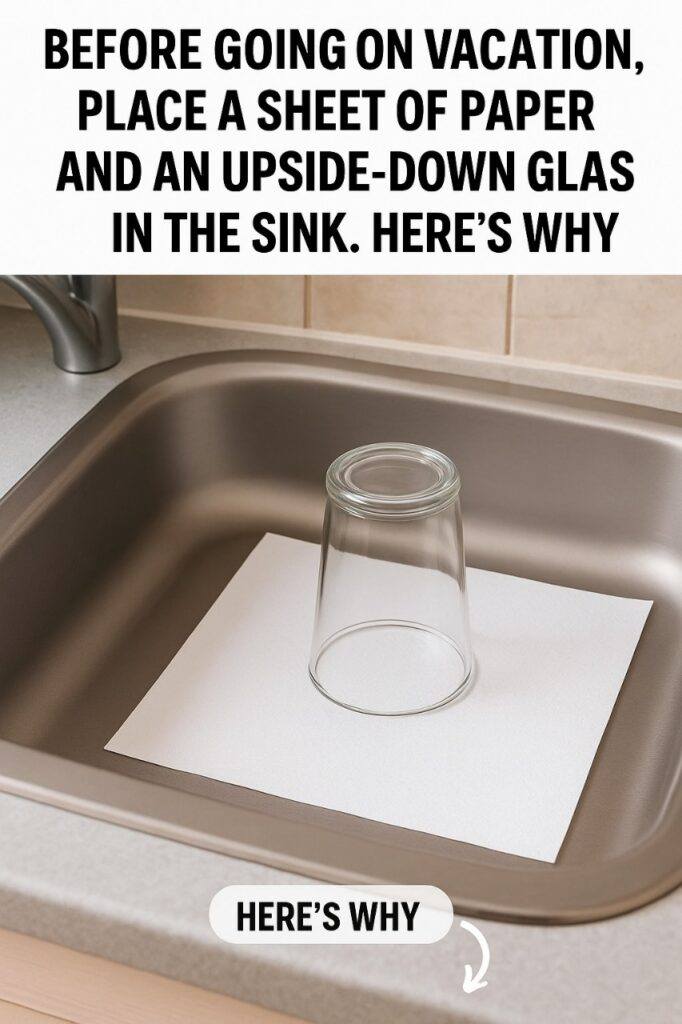
3. The upside-down glass barrier explained
The upside-down glass barrier is a simple yet effective physical method to prevent odors and pests from entering your kitchen through the sink drain. By placing a piece of absorbent paper over the drain and then covering it with an inverted glass, you create a passive seal that blocks air and insect movement.
This setup works because the paper acts as a moisture absorbent and physical filter, while the glass provides a stable, airtight cover. Unlike standard sink stoppers, this method does not rely on mechanical seals that can fail due to drying out or shifting. Instead, it exploits gravity and surface contact to maintain a consistent barrier without pressure buildup.
Plumbers with years of experience recommend this approach as it reduces the risk of gas infiltration by up to 80% during extended absences. It is particularly advantageous because it requires no special equipment, is economical, and minimizes the risk of damaging your plumbing or inviting pests.
4. Step-by-step sink preparation routine
- Clean the sink thoroughly: Remove debris and scrub the sink basin and drain edges to eliminate food particles and grease.
- Treat the drain with white vinegar: Pour 2 to 3 liters of hot or boiling white vinegar down the drain. This natural disinfectant helps break down residues and reduce bacterial colonies.
- Let it sit: Allow the vinegar to work for several hours or overnight while temporarily blocking the sink drain with a stopper or cloth.
- Rinse with hot water: Flush the drain with hot water to remove loosened debris and vinegar residues.
- Neutralize odors: Rub half a lemon around the drain opening to impart a fresh scent and further neutralize unpleasant smells.
- Dry the sink: Use a clean towel to ensure the sink and drain area are completely dry before sealing.
- Apply the barrier: Place a sheet of absorbent paper (such as kitchen towel) directly over the drain, then invert a glass over it to cover the opening fully.
This routine not only cleans and disinfects the sink and pipes but also establishes a physical barrier that lasts throughout your absence, minimizing the chance of odors or pests entering.
5. Why sink stoppers aren’t enough
While it may seem logical to use a conventional sink stopper to seal off the drain, these devices often fall short. Many stoppers do not create a completely airtight seal, especially if they are rubber plugs that can dry, shrink, or shift during temperature changes. Even slight movement can allow air and insects to pass through.
Additionally, some sinks have drain designs that make it difficult to fit stoppers securely. Over time, the rubber or silicone materials can degrade, further reducing their effectiveness. In contrast, the upside-down glass and paper method creates a passive seal that adapts to the sink’s surface irregularities without relying on mechanical tension.
This method also avoids the risk of trapping moisture inside the plumbing, which can sometimes happen with stoppers, potentially worsening odor issues. The glass barrier limits air flow gently but effectively, making it a safer and more reliable solution for extended periods.






