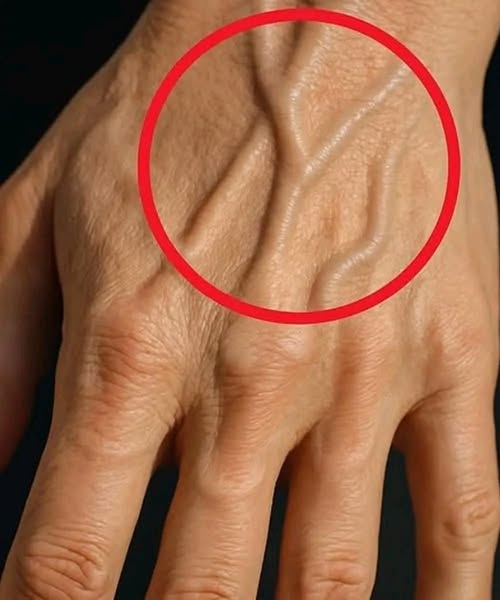
As you age, your skin naturally loses collagen and elasticity, leading to thinning and increased transparency. Thinner skin allows underlying veins to become more visible, particularly on the hands, forearms, and legs.
This is a normal part of the aging process and does not necessarily indicate any vascular disease. However, older adults should monitor for other symptoms like pain, swelling, or skin changes near visible veins, which may require medical evaluation.
5. Hormonal Changes
Hormonal fluctuations can influence vein visibility by affecting blood flow and vessel tone. Common examples include pregnancy, menopause, and menstrual cycle changes. During pregnancy, increased blood volume and hormonal effects on vessel walls can cause veins to become more prominent.
Similarly, during menopause, decreased estrogen levels can alter skin thickness and vascular function, sometimes making veins easier to see. These changes are usually temporary or gradual and often improve or stabilize over time.
If hormonal changes coincide with other symptoms like swelling or pain, it’s important to seek medical advice to exclude vascular complications such as varicose veins or thrombophlebitis.






