3. Pressure Washing Risks
While pressure washing is a popular method for cleaning siding, it carries risks, especially if not done properly. High-pressure water streams can force moisture behind siding panels, potentially leading to mold growth or structural damage within walls.
Other potential issues with pressure washing include:
- Damaging or warping older vinyl siding
- Removing paint or surface finish unintentionally
- Leaving streaks or uneven cleaning marks
- Etching or damaging softer materials such as fiber cement
For these reasons, pressure washing should be used cautiously and preferably by professionals familiar with house siding materials and their tolerances.
4. Letting Cleaner Work
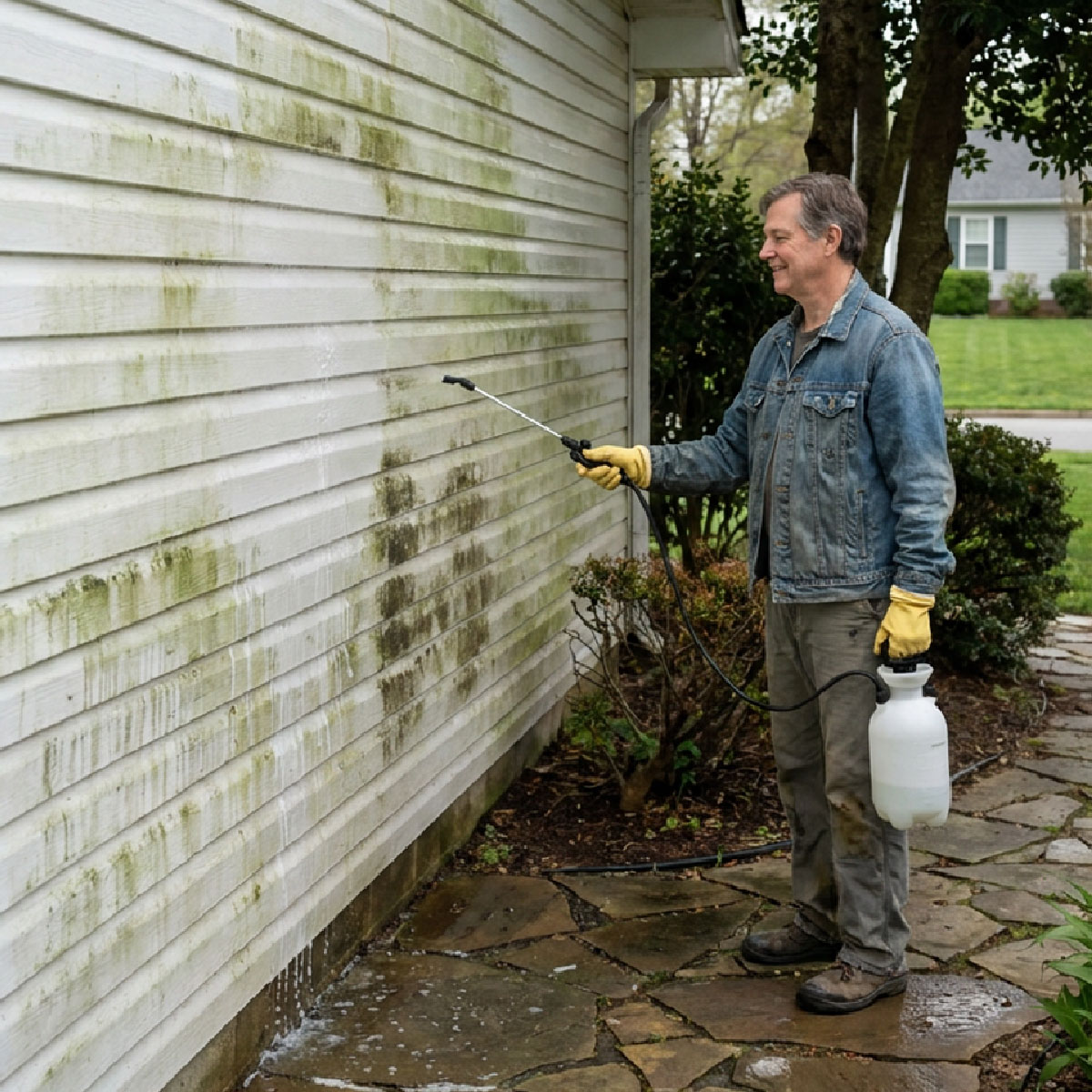
Instead of aggressive scrubbing or immediate rinsing, one of the most effective strategies is applying a siding cleaner designed for algae removal and then allowing it to sit for the recommended time. This waiting period enables the cleaning agents to break down the algae’s hold on the surface chemically.
By letting the cleaner work, homeowners often find that much of the algae loosens and rinses away with minimal effort. This approach reduces the risk of damaging siding from excessive scrubbing and saves time.
5. Choosing the Right Cleaner
Selecting a cleaner specifically formulated for your type of siding is crucial. Products labeled for vinyl siding, exterior house wash, mold and mildew removal, or algae treatment are available at most home improvement stores.
Key considerations when choosing a cleaner include:
- Compatibility with your siding material (vinyl, painted wood, fiber cement, etc.)
- Manufacturer’s instructions and safety guidelines
- Whether the product is safe for surrounding plants and landscaping
Using an inappropriate cleaner can cause discoloration or damage, so always verify suitability before application.