6. Wear protective gloves
Handling lawn mower blades always carries a risk of cuts, even when the blade is dull. Wearing thick, cut-resistant gloves is essential during removal, sharpening, and reinstallation.
Gloves protect your hands from sharp edges and accidental slips. They also provide better grip when holding the blade steady, making the process safer and more efficient.
Choose gloves specifically designed for mechanical or gardening work, as standard cloth gloves may not offer adequate protection.
7. Balance the blade
Balancing the blade after sharpening is critical to prevent excessive vibration and premature wear on your mower’s engine and components. An unbalanced blade can cause damage and impair cutting performance.
To check balance, place the blade horizontally on a blade balancer or a nail driven into a wall. If one side dips lower, that side is heavier. You can lightly sand the heavier side to equalize the weight, checking frequently to avoid over-sanding.
Properly balanced blades ensure smoother operation, longer mower life, and a cleaner cut on your lawn.
8. Clean mower deck
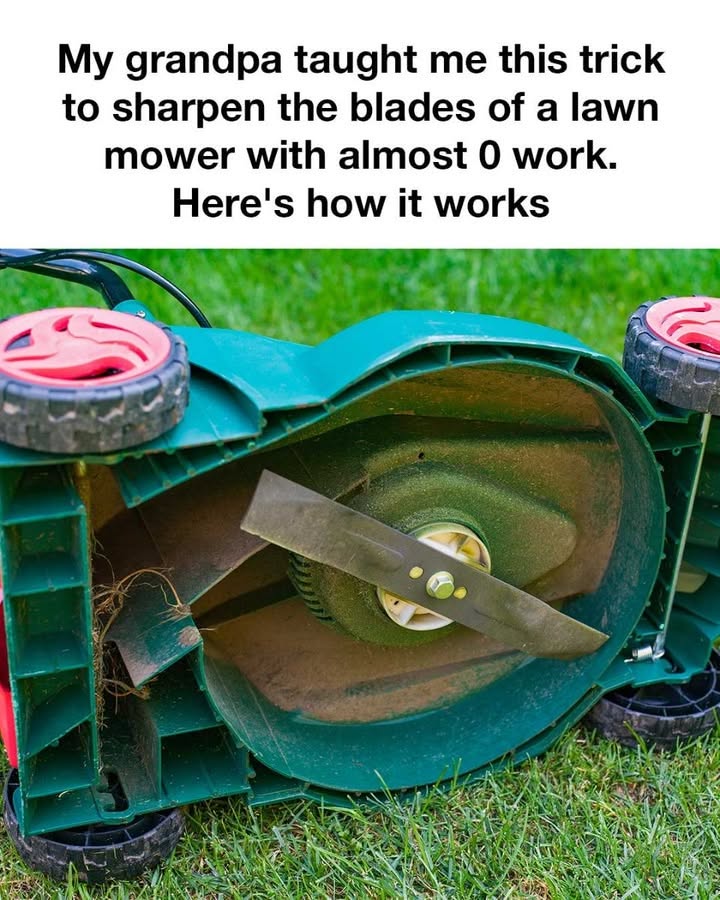
While the blade is off, take the opportunity to clean the mower deck. Grass clippings, dirt, and debris accumulate under the deck and can cause rust, reduce airflow, and impair cutting efficiency.
Use a brush or scraper to remove buildup, then wipe down the surface with a damp cloth. If rust is present, treat it with a rust remover or a wire brush to prolong the life of the deck.
Regular cleaning of the mower deck not only improves performance but also minimizes corrosion and maintenance costs over time.