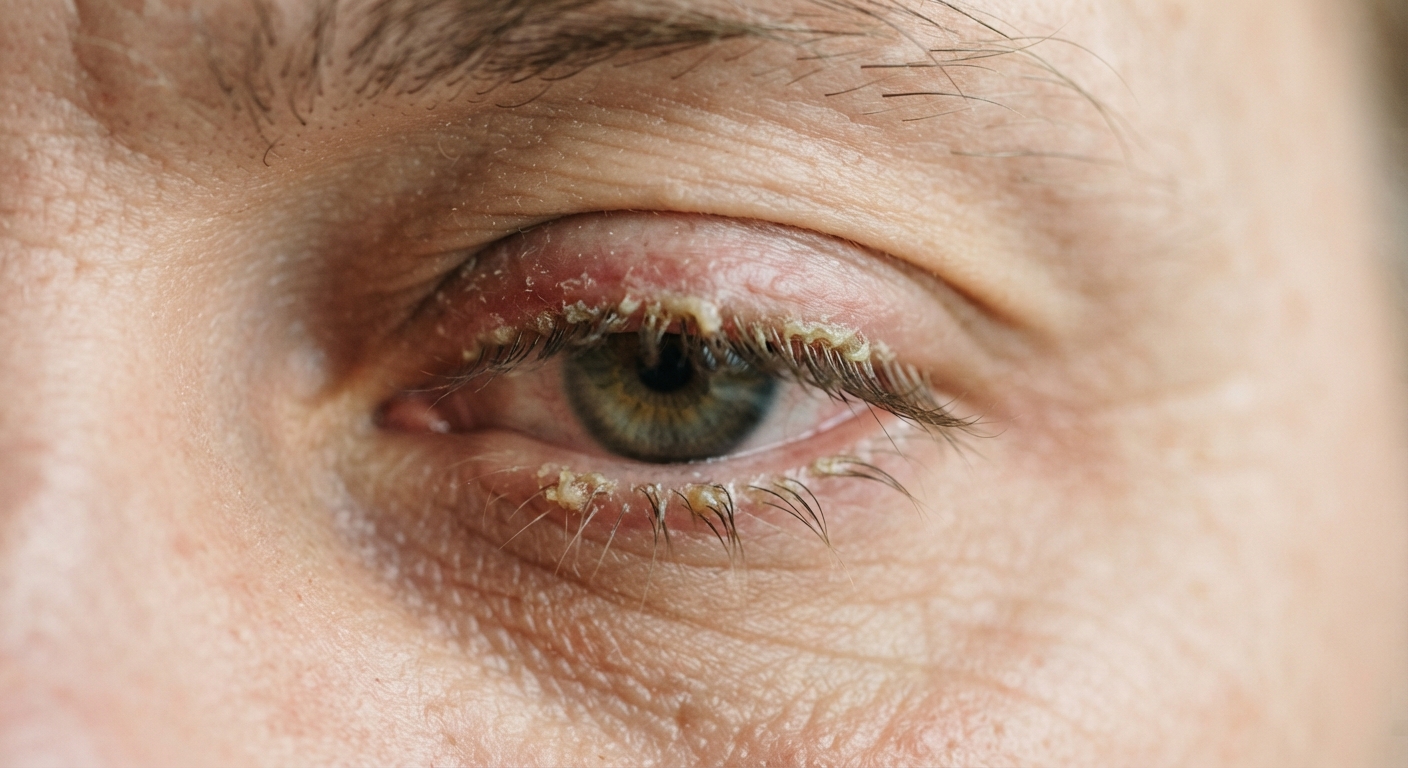
6. Blepharitis
Blepharitis is a chronic inflammation of the eyelid margins that can cause yellow crusty discharge, especially noticeable upon waking. This condition results from bacterial overgrowth or malfunction of the oil glands in the eyelids, leading to clogged glands and irritation.
Symptoms include itchy, red, swollen eyelids, flaking skin around the eyes, and a sensation of burning or grittiness. The discharge can be thick and yellowish, sticking the eyelashes together overnight.
Treatment focuses on maintaining strict eyelid hygiene with warm compresses and gentle scrubbing of the eyelid margins. In some cases, doctors may prescribe antibiotic ointments or oral antibiotics if there is significant bacterial involvement.
7. Conjunctivitis
Conjunctivitis, an inflammation of the conjunctiva (the membrane covering the white part of the eye and inner eyelids), is a common cause of yellow eye discharge. It can be caused by bacterial or viral infections, allergies, or irritants like smoke or chlorine.
Bacterial conjunctivitis typically produces thick yellow or green discharge, whereas viral forms usually cause watery or mucous discharge. Allergic conjunctivitis often leads to clear or white discharge but may become yellow if secondary infection occurs.
Symptoms include redness, irritation, tearing, and crusting of the eyelids. Treatment depends on the cause: bacterial requires antibiotics, viral is managed with supportive care, and allergic conjunctivitis benefits from antihistamines or anti-inflammatory medications.
8. Medication side effects
Certain medications can alter tear production or composition, leading to changes in eye discharge. For example, some antihistamines, antidepressants, and blood pressure drugs can reduce tear secretion, causing dry eyes and increased discharge accumulation.
In addition, topical eye medications like glaucoma drops may cause irritation or allergic reactions that result in yellowish discharge. If you notice changes in your eye discharge after starting a new medication, consult your prescribing doctor rather than stopping the medication on your own.
Your doctor may adjust the dosage, suggest alternative treatments, or recommend supportive eye care to alleviate symptoms.