Is Your Floor Dull Because of Residue, Finish Wear, or Mineral Deposits?
If your floor still looks dull hours after mopping, the problem usually isn’t dirt. Instead, it may be caused by one of three distinct issues, each requiring a different approach—and only one of which is fixed by mopping better.
Before spending money on stronger cleaners or additives, you can quickly diagnose the cause with a simple two-minute test that will save you unnecessary effort and expense.
Step 1: Check for Residue With a Water-Only Patch Test
Choose a visible one-foot square area on your floor and clean it using only hot water and a microfiber cloth wrung out so it’s almost dry—no soap or cleaner. Wipe the patch multiple times with clean parts of the cloth, then let it dry completely.
If this spot appears noticeably brighter and less dull than the rest of the floor, residue buildup is your culprit. This residue often results from detergent overdosing or repeated use of “shine” products that leave a plastic film. Fortunately, this is the easiest problem to fix: a thorough rinse with clean water and improved cleaning technique can remove it.
Step 2: Test If the Floor Finish Is Worn
Place a single drop of water on a dull spot and observe it for a few minutes. If the water beads up and remains on the surface, your floor’s protective finish is intact, and the issue lies above the finish (likely residue).
If the water spreads out, darkens the surface, or soaks in within minutes, the finish is worn or damaged. This wear occurs when grit scratches the protective coating, scattering light and causing dullness that no cleaner can fix.
Repairing finish wear can be costly: a screen and recoat costs about $1–$2 per square foot, while full sanding and refinishing ranges from $3 to $8 per square foot. Luxury vinyl and laminate floors don’t offer recoating options; replacement may be necessary at $3 to $7 per square foot installed.
Knowing this early can save thousands of dollars and help you decide whether to maintain grit control or prepare for repairs.
Step 3: Beware of Mineral Deposits From Hard Water and Additives
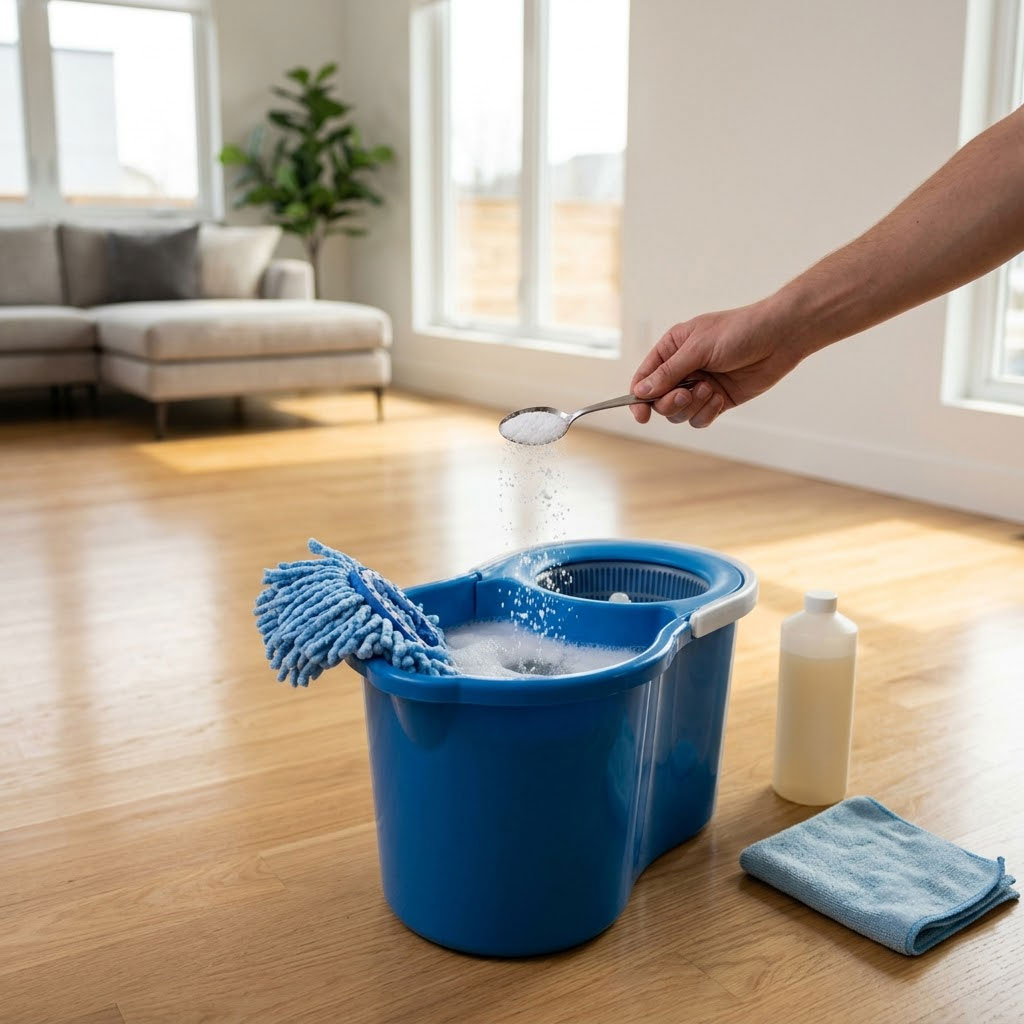
Hard water deposits can leave a chalky film that looks like dullness. Some popular DIY recommendations, like adding washing soda (sodium carbonate), actually worsen this by precipitating minerals onto your floor’s surface, especially on hardwood, laminate, or luxury vinyl floors. These floors require pH-neutral cleaners to avoid damaging the finish and voiding warranties.
Washing soda is effective only on surfaces like ceramic tile, grout, and sealed concrete, where it helps remove grease without harm. Using it on sensitive flooring types risks finish dulling and expensive repairs.
Check Your Cleaning Technique Before Buying More Products
Often, the cause of dullness is not the strength of your cleaner but how you mop. Using too much detergent, dirty mop water, or skipping pre-cleaning steps can leave residue or spread grime rather than removing it.
Simple improvements in your cleaning routine can keep floors looking cleaner and shinier longer, preserving the finish and avoiding costly repairs.
Here are the 10 most effective ways to keep your floor bright and protected. Number 7 is the one that professionals swear by — and it costs less than a minute each day.