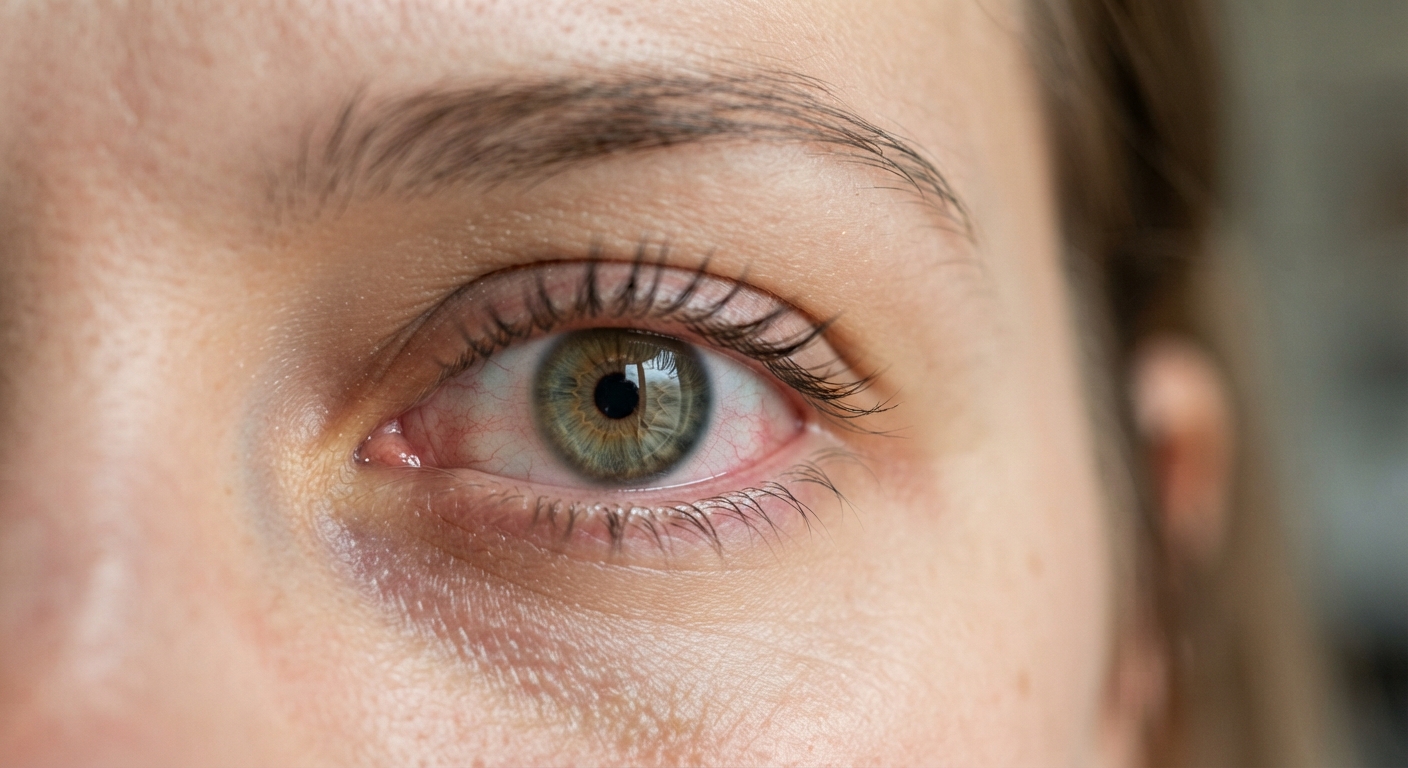
6. Light sensitivity and blurred vision
Photophobia and intermittent blurred vision often indicate inflammation affecting intraocular structures such as the iris, ciliary body, or cornea. These symptoms are classic signs of anterior uveitis and corneal inflammation, both of which can threaten vision if untreated.
Photophobia arises because inflammation sensitizes nerve endings and causes irregularities in the ocular media. Blurred vision fluctuates as inflammatory cells and corneal edema alter light transmission. These symptoms often worsen with bright light and improve with rest or blinking.
An urgent eye exam with slit-lamp biomicroscopy, intraocular pressure measurement, and dilated fundus examination is essential to detect intraocular inflammation and its complications, including synechiae, cataracts, or glaucoma. Prompt initiation of anti-inflammatory treatment preserves visual function and prevents irreversible damage.
7. Floaters and flashes
New onset floaters and flashes of light can signal posterior segment inflammation such as vitritis, retinitis, or retinal vasculitis. While stable, longstanding floaters are usually benign, a sudden increase or new flashes warrant urgent ophthalmic evaluation.
Posterior uveitis causes inflammatory cells to accumulate in the vitreous, producing floaters. Retinal inflammation or traction can generate photopsias (flashes). These signs may be associated with systemic autoimmune diseases like sarcoidosis, Behçet’s disease, or infectious etiologies including syphilis or Lyme disease.
Diagnosis relies on dilated fundus examination and optical coherence tomography (OCT) to assess retinal and vitreous involvement. Fundus photography and widefield imaging help document disease activity and guide treatment decisions. Multidisciplinary care involving rheumatology or infectious disease specialists is often necessary to address underlying systemic causes.
8. Eyelid swelling and styes
Chronic inflammation of the eyelids manifests as persistent swelling, recurrent styes (hordeola), chalazia, and meibomian gland dysfunction. The eyelids play a crucial role in maintaining ocular surface health by secreting essential lipids for tear film stability.
Recurrent styes or localized swelling suggest inflammation of the eyelid margin or glands. Chalazia develop when meibomian gland ducts become blocked and inflamed, often following untreated styes. These conditions may be linked to blepharitis, rosacea-associated ocular disease, or systemic inflammatory disorders.
Meibomian gland dysfunction leads to thickened secretions, duct obstruction, and progressive gland atrophy, causing evaporative dry eye symptoms. Patients often report morning crusting, eyelid tenderness, and worsening dryness throughout the day.
Management includes consistent lid hygiene with warm compresses and lid scrubs, in-office gland expression or thermal pulsation treatments, and, if indicated, topical or oral anti-inflammatory medications such as short-term corticosteroids or doxycycline. Early intervention aims to restore gland function and prevent permanent damage.






