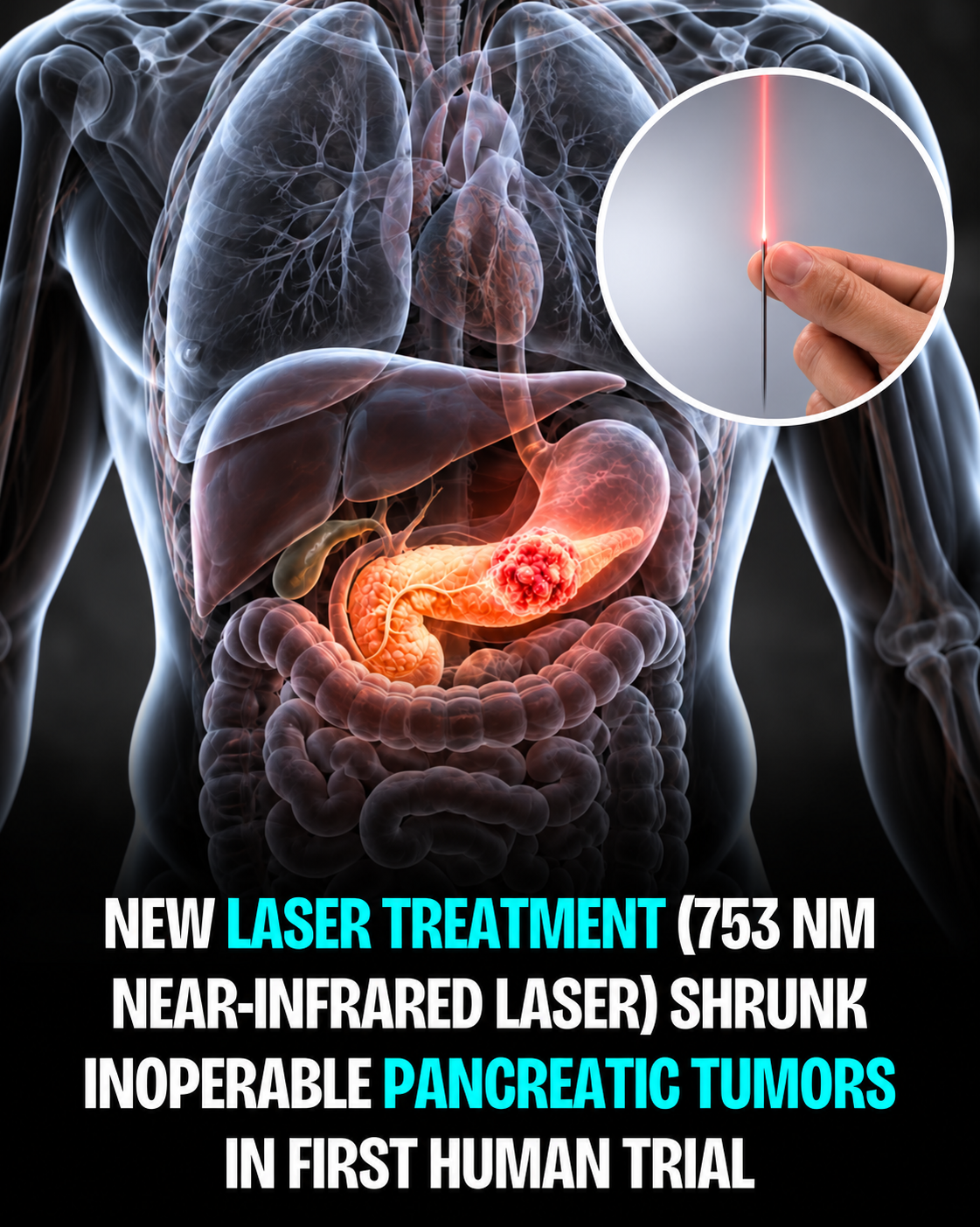
Researchers are testing a new light-based therapy designed to treat pancreatic tumors that are typically too risky to remove surgically because they involve major arteries. This experimental method aims to make surgery possible for patients with these advanced tumors.
The treatment combines a drug called padeliporfin with a near-infrared laser emitting light at 753 nanometers. After giving the drug, doctors insert a small balloon with the laser inside the affected blood vessel. The laser is applied in two sessions of five minutes each.
When activated by the laser light, padeliporfin causes a chemical reaction that damages the blood vessels feeding the tumor. This process targets cancerous tissue around the artery, potentially shrinking it enough to allow surgeons to remove the tumor safely. Surgery is usually attempted about two weeks after therapy.
In an initial Phase I trial involving six patients with locally advanced pancreatic cancer deemed inoperable, four were able to have surgery after treatment. In three of these cases, no cancer cells were found at the edges of the removed tissue, suggesting the tumor was effectively targeted. However, this early research is limited, and more extensive studies are needed to confirm safety and long-term benefits.