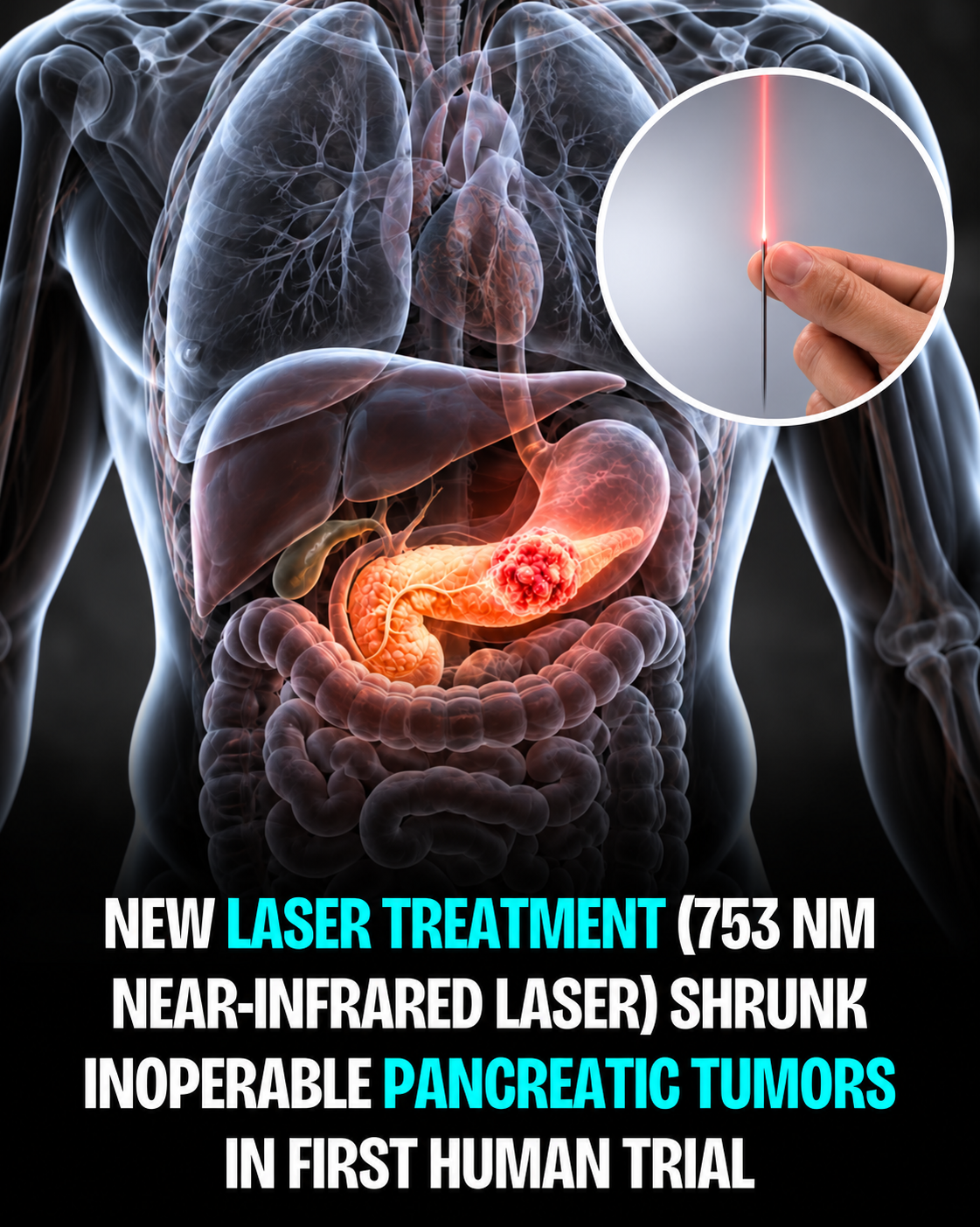
1. Experimental Therapy Overview
This new treatment is being tested in a small clinical trial to help patients with pancreatic tumors that are currently deemed inoperable due to their involvement with critical arteries. Such tumors pose a high surgical risk because removing them might damage essential blood vessels.
The approach involves administering padeliporfin, a drug that becomes active when exposed to light. After the drug is given, a specialized balloon containing a laser is inserted into the artery near the tumor. The laser emits light at a near-infrared wavelength of 753 nanometers in two sessions lasting five minutes each.
The goal is to weaken and destroy the tumor tissue surrounding the artery, making it possible to surgically remove the remaining tumor after a waiting period of about two weeks. Initial results from six patients showed that four were able to undergo surgery, and in three of those cases, no cancer cells were found at the surgical margins.
2. Treatment Mechanism
Padeliporfin works as a photosensitizer, meaning it triggers a chemical reaction when exposed to specific light wavelengths. In this treatment, the 753 nm laser activates the drug, causing damage to the blood vessels that supply the tumor. This targeted vascular injury leads to the destruction of cancerous tissue around the artery without directly cutting into the tumor.
This selective damage to tumor-associated vessels aims to reduce tumor size or limit its spread, which in turn may enable surgeons to operate on tumors that were previously considered too risky to remove. The therapy requires careful timing, as the light exposure must be controlled precisely to activate the drug effectively while minimizing harm to surrounding healthy tissue.