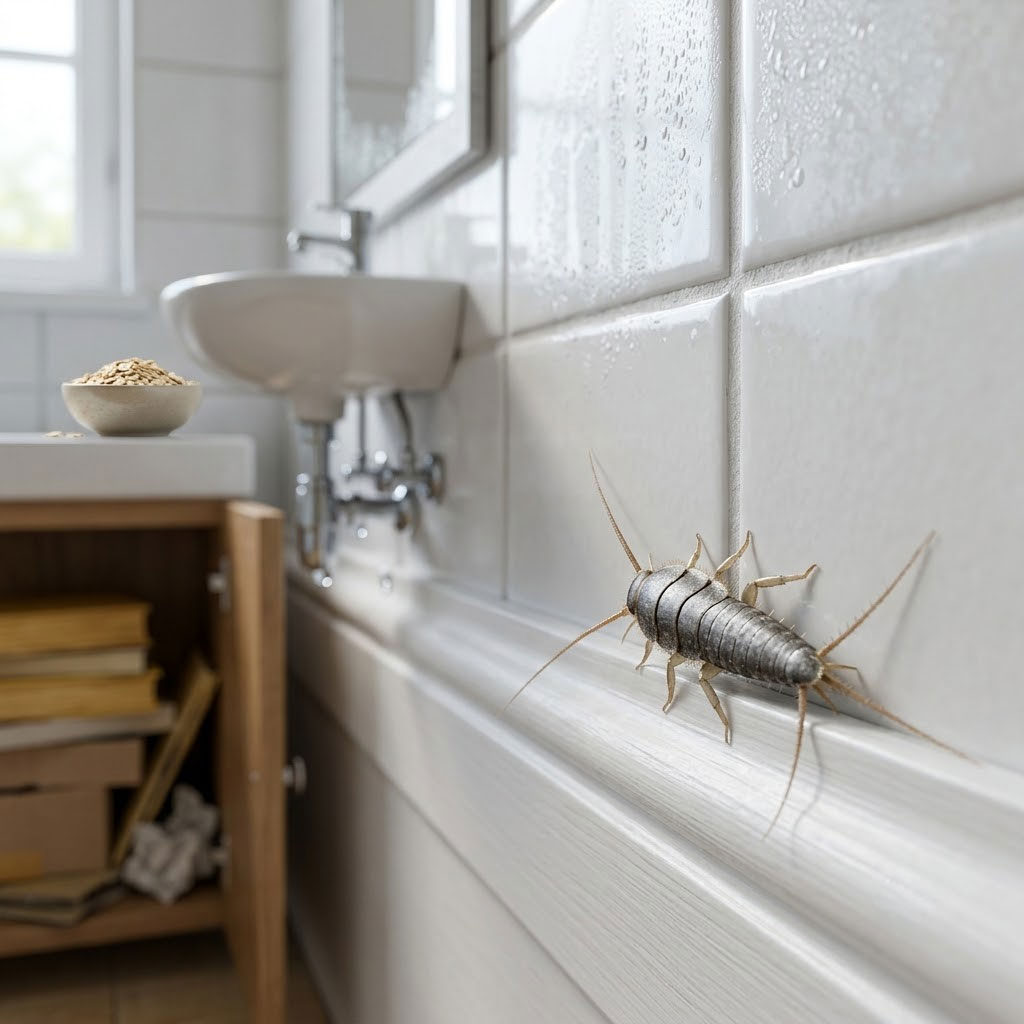
Emergency note: If you notice widespread dampness, musty odors, or visible mold alongside silverfish, consider consulting a professional promptly to assess potential health risks and structural damage.
Silverfish Are Harmless, But Their Presence Signals a Costly Problem
Silverfish themselves don’t bite, sting, or carry disease, and they won’t damage your home’s structure like termites. Yet, spotting one is far from trivial—it’s a clear signal that your home has a serious moisture issue. Unlike many pests, silverfish require high humidity—above roughly 75% relative humidity—to survive and reproduce. This means their appearance is a live indicator that somewhere in your house, damp conditions have taken hold.
Why does this matter? Because the same damp environment that silverfish thrive in is exactly what mold needs to grow. Mold growth often remains hidden for months behind walls, under floors, or inside cabinets before it becomes visible or emits its characteristic musty smell. By the time you notice mold, the damage is already costly and extensive.
Moisture Problems Can Escalate Fast—and Expense Can Skyrocket
An overlooked moisture source can lead to multiple expensive issues:
- Mold remediation: Small patches might cost a few hundred dollars, but widespread mold inside walls, floors, or HVAC systems can run into thousands or even tens of thousands of dollars.
- Structural damage: Persistent dampness causes wood rot, drywall deterioration, flooring damage, and ruined insulation, all requiring costly repairs.
- Basement waterproofing: If moisture comes from outside through the foundation, professional waterproofing or drainage work often costs several thousand dollars and becomes more complicated the longer it’s ignored.
- Health concerns: Mold spores aggravate allergies and respiratory conditions, especially in children, the elderly, and those with asthma.
Remember, the silverfish itself costs you nothing, but the moisture problem it reveals can lead to thousands of dollars in damage and health issues if left untreated.
Location Helps You Pinpoint the Source
Where you see silverfish can guide your investigation:
- Bathroom: Often due to inadequate ventilation, broken exhaust fans, or leaks under sinks or behind toilets.
- Basement or crawl space: Usually indicates water intrusion through the foundation or chronic high humidity—conditions that worsen over time and require urgent attention.
- Kitchen: Slow leaks under sinks or around dishwashers are common culprits.
- Laundry room: May be caused by improperly vented dryers or leaking washer connections.
- Around windows: Condensation from poor sealing or inefficient windows can soak sills and frames.
Each situation demands a different repair approach, but the key is clear: the silverfish is the visible warning sign pointing to a hidden moisture problem. Addressing that underlying issue is the only way to get rid of them permanently.
Before reaching for sprays or traps, understand that silverfish are nature’s moisture detectors. Treat the dampness, and the insects will disappear on their own.
Here are the 10 critical factors that reveal why silverfish appear and how to solve the problem. Number 7 is the step most homeowners overlook — and it makes all the difference.






