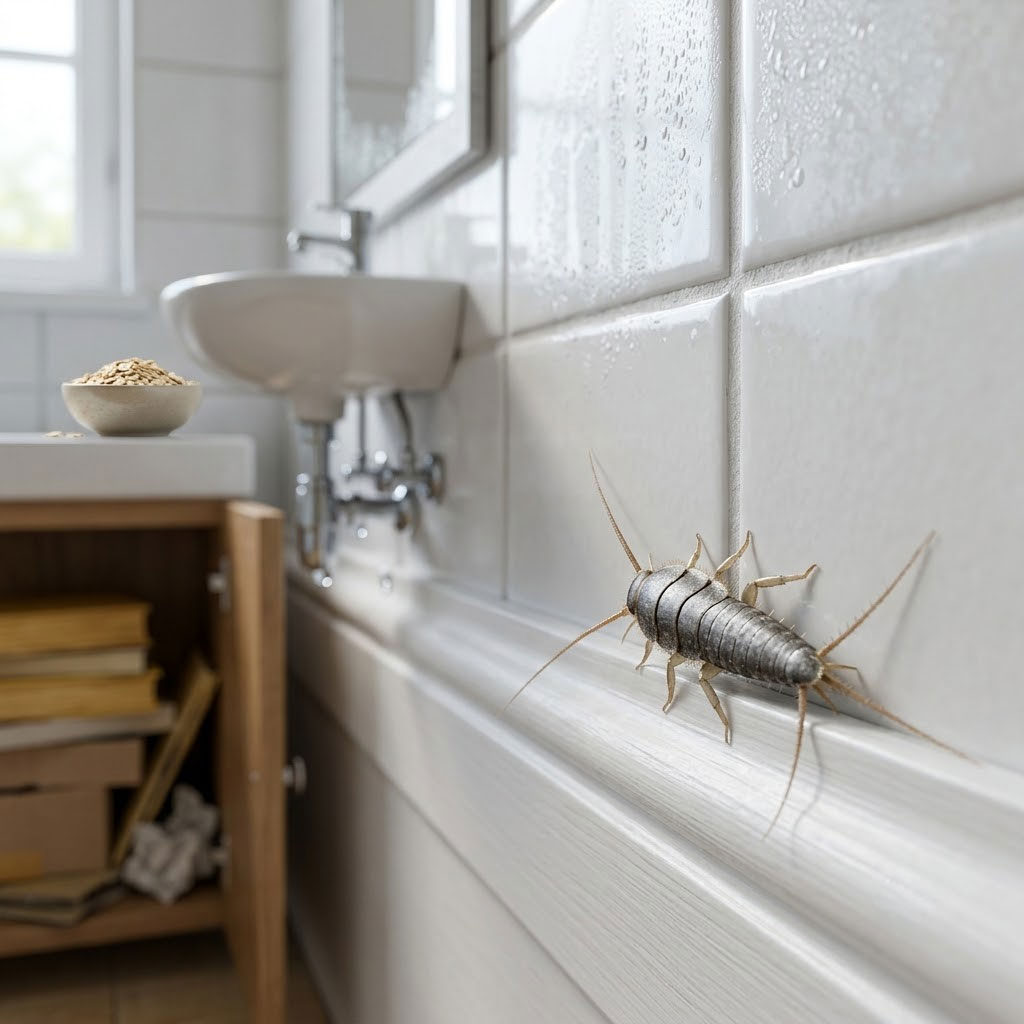
1. Your Home Has a Moisture Problem Somewhere
Silverfish require a consistently humid environment to survive. Their presence is a strong signal that somewhere in your home, the relative humidity is above 75%, creating an ideal habitat for them. This moisture problem could be hidden behind walls, under floors, or in less obvious places like crawl spaces and attics.
Check your home carefully for signs of excess moisture. Look for slow leaks under sinks or behind toilets, condensation on windows, damp or discolored patches on walls, and musty odors. Bathrooms, basements, kitchens, and laundry rooms are the most common hotspots.
Using a hygrometer—a small device that measures humidity—can help pinpoint the problem areas. Aim to keep indoor relative humidity below 50% to discourage silverfish and prevent mold growth. Investing in a dehumidifier for the dampest spaces is often the most effective solution.
- Inspect plumbing for slow leaks or drips
- Check for poor ventilation in bathrooms and laundry rooms
- Look for condensation around windows and walls
- Detect hidden water damage behind cabinets or beneath floors
2. There’s a Food Source They’re Reaching
Silverfish feed primarily on carbohydrates and starches, many of which are common household materials you may not suspect. They consume paper, cardboard, wallpaper glue, flour, cereal, pet food, and natural textiles such as cotton and linen.
Open pantry items and piles of paper provide a continuous food supply that supports their population. Removing or securing these food sources is key to controlling their numbers.
Store dry goods in airtight containers to prevent access, and regularly clear out old newspapers, magazines, cardboard boxes, and other paper clutter. This reduces both the insects’ food and their shelter.
- Paper products: books, newspapers, cardboard boxes
- Food items: flour, cereal, oats, pet food
- Textile materials: cotton, linen clothing and fabrics
- Wallpaper and its adhesive