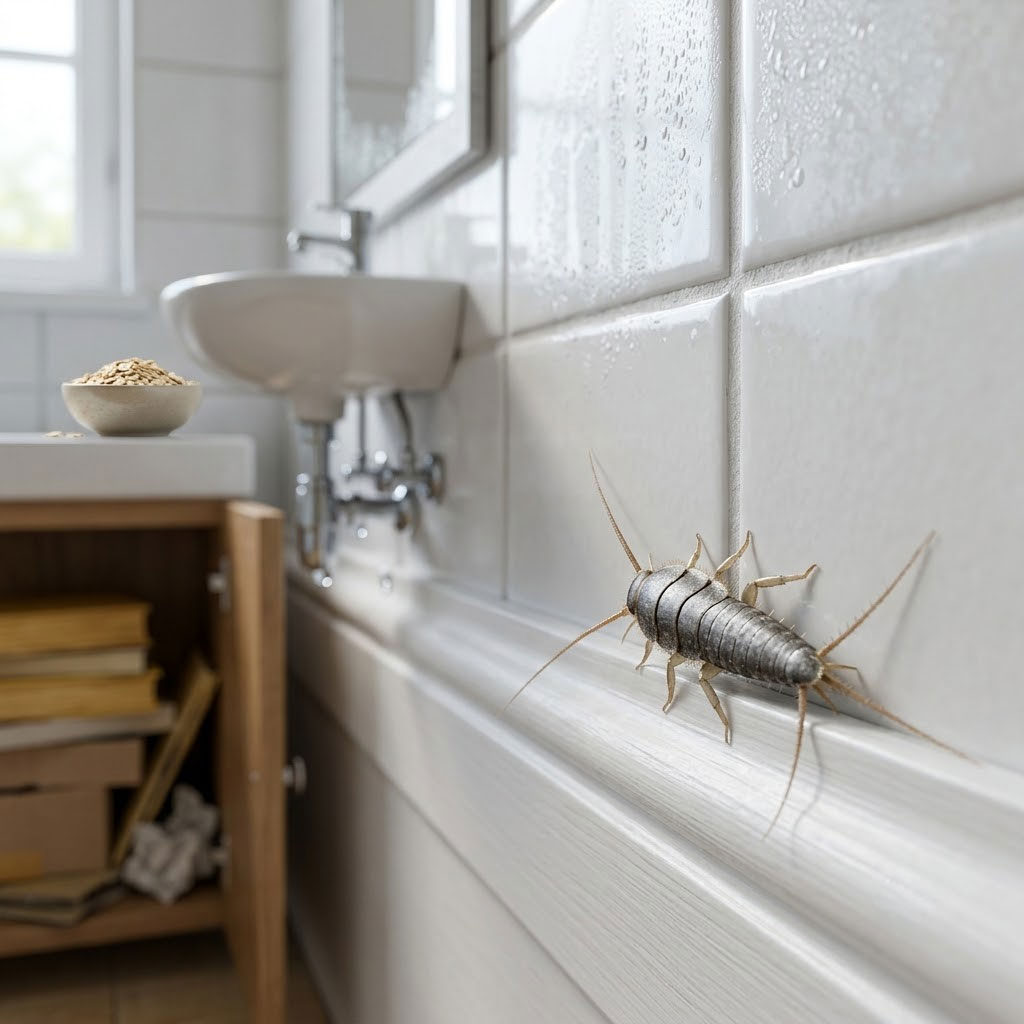
9. Using Traps and Cleaning Strategies
Sticky traps placed along baseboards, behind appliances, and near suspected hiding spots can help monitor silverfish activity and reduce their numbers. Place traps where you have seen movement or droppings.
Regular cleaning reduces food particles and eggs. Vacuum along baseboards, under cabinets, and in corners to remove insects, larvae, and eggs. Wiping down surfaces to keep them dry also discourages silverfish.
- Set up sticky traps in high-activity areas
- Vacuum regularly, focusing on edges and hidden spots
- Wipe down wet surfaces in bathrooms and kitchens
- Remove clutter to reduce hiding places
10. When to Call a Professional
If silverfish persist despite your efforts, or if you discover multiple infestation sites across your home, professional pest control services can provide targeted treatments and inspections. Licensed specialists can locate hidden nests and assess underlying moisture problems you might miss.
If moisture intrusion is severe—such as foundation leaks, drainage failures, or structural water damage—you may also need contractors specializing in waterproofing or home repairs. Addressing these root causes is essential to prevent recurring infestations.
When to See a Doctor
Silverfish themselves do not bite, sting, or transmit disease, so they do not present a direct health risk. However, the moisture conditions they indicate may promote mold growth, which can aggravate allergies, asthma, and respiratory conditions.
If you or household members experience unexplained respiratory symptoms, persistent allergies, or asthma flare-ups, consider consulting a healthcare professional. Improving your home environment by eliminating moisture and mold will support better indoor air quality and health.
Conclusion
Finding a silverfish in your home is not a cause for panic about the insect itself, but it is a valuable early warning sign. These bugs signal hidden moisture problems that can lead to costly mold remediation, structural damage, and health issues.
Focus on identifying and fixing moisture sources, improving ventilation, sealing entry points, and removing food supplies. With these steps, silverfish will naturally disappear because their essential habitat conditions no longer exist.
Remember, the silverfish is not the problem—it is the messenger pointing you toward a critical home maintenance issue worth addressing promptly.
This article is for informational purposes only and does not replace professional pest control or medical advice. Consult licensed professionals for pest infestations and healthcare providers for medical concerns.






