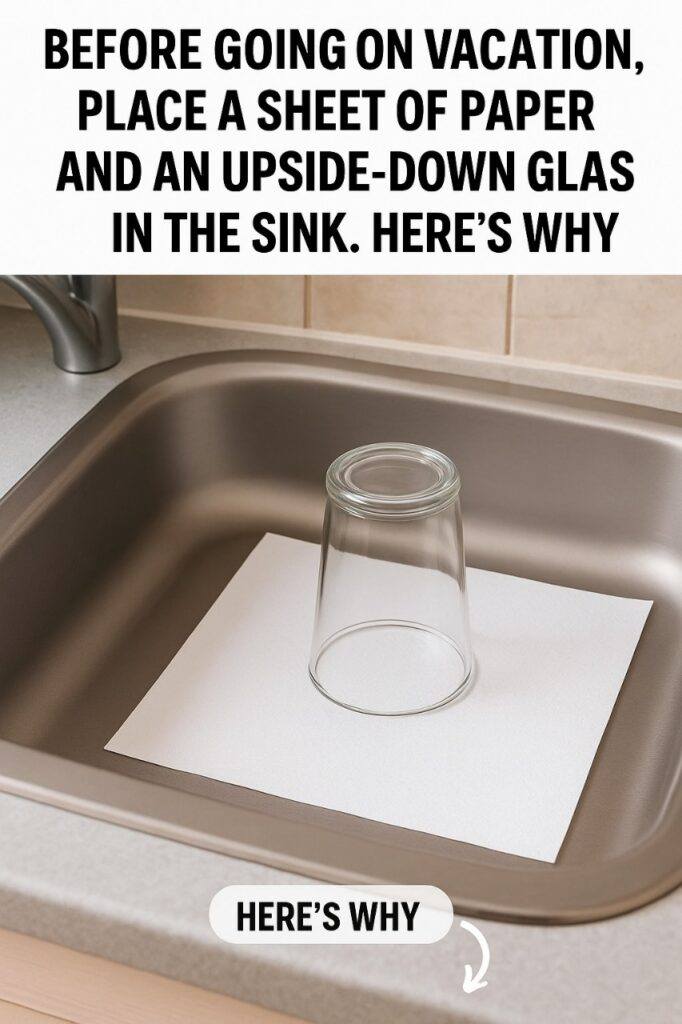
1. Why the kitchen sink is a risk when away
When you leave your home for an extended period, such as during a vacation, the kitchen sink can become a hidden vulnerability. This area is directly connected to your home’s plumbing system, which can cause several issues if left unattended. Without regular water flow, the siphon—the curved pipe under the sink designed to hold water and block sewer gases—can dry out. This evaporation breaks the natural barrier that prevents odors and pests from entering your living space.
Moreover, any residual food particles or grease in the drain can become sources of bacterial growth, leading to unpleasant smells. This environment can also attract insects like ants, cockroaches, or drain flies that thrive in damp, organic-rich places. When the sink’s protective water seal is compromised, these pests can easily migrate into your kitchen, creating hygiene problems and discomfort upon your return.
In addition, stagnant humidity in the pipes during your absence can promote mold or mildew growth, which might not be immediately visible but can affect indoor air quality. This combination of factors makes the kitchen sink an overlooked but significant risk zone during prolonged absences.
2. How odors and pests enter through pipes
Odors and pests gain access to your kitchen primarily through the plumbing system’s open drains. Under normal use, the water sitting in the P-trap acts as a barrier to gases and insects. However, when this water evaporates over days or weeks without use, the seal breaks, allowing sewer gases, which contain volatile organic compounds, to rise into the sink and spread into your kitchen.
These gases are not only unpleasant but can sometimes cause mild irritation to the respiratory tract. Simultaneously, small insects exploit these open pathways. Drain flies, for example, breed in the organic matter lining pipes and can appear as tiny flying nuisances near drains. Ants and cockroaches can also follow moist routes through plumbing to invade your kitchen, especially when attracted by leftover food or grease residues.
The problem is compounded by temperature and humidity variations, especially during warm months. Heat accelerates evaporation in the siphon, while humidity encourages pest activity. Without a physical barrier or liquid seal, your kitchen sink becomes a gateway for these unwelcome intruders and odors.