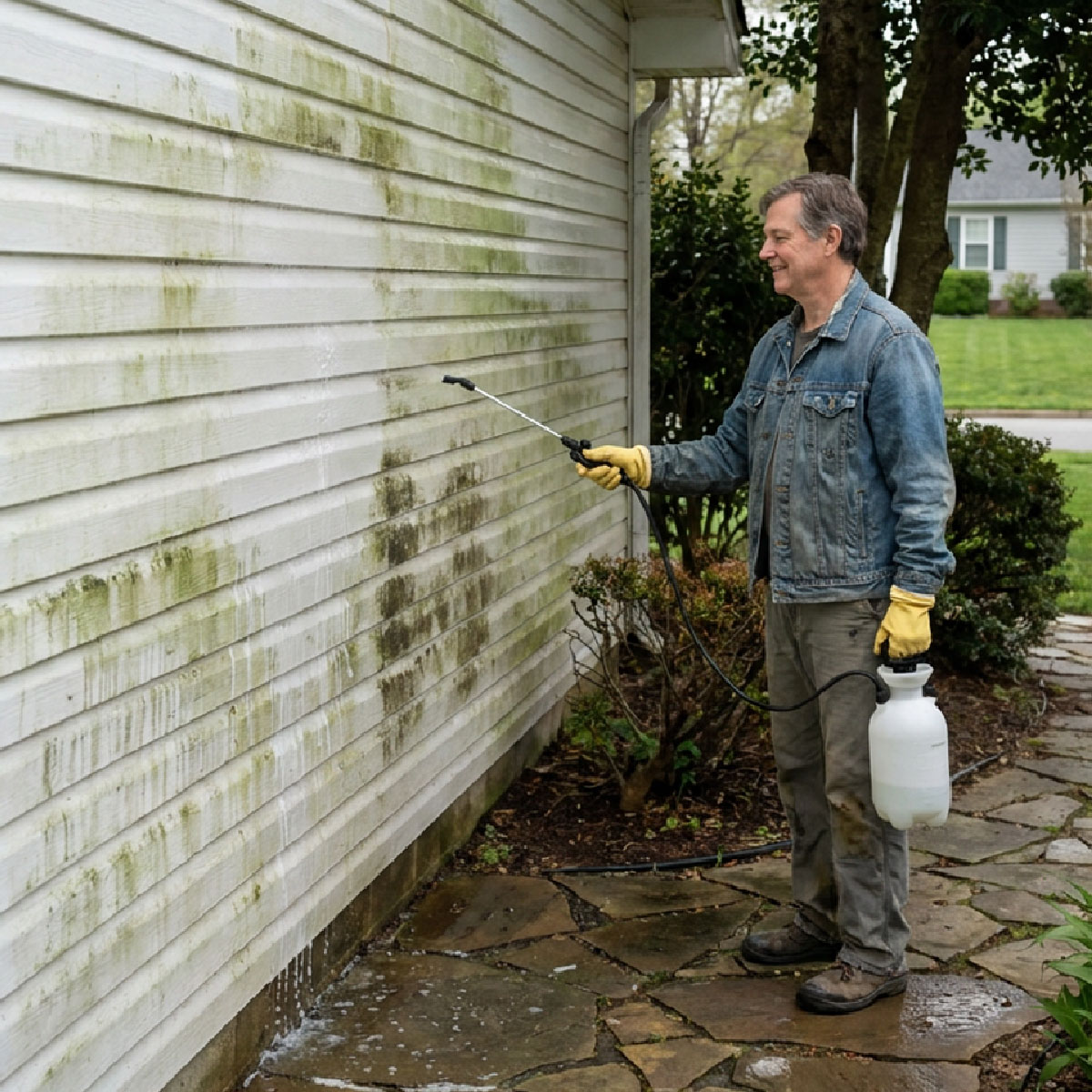
1. Causes of Green Algae
Green algae on house siding primarily develop due to the presence of moisture and suitable environmental conditions that favor their growth. Algae are simple plants that thrive in damp, shaded areas with limited airflow. When siding remains wet for extended periods, especially after rain or dew, it creates the perfect environment for algae colonies to establish and spread.
Common contributing factors include:
- Persistent moisture from rain, irrigation, or humidity
- Shade that prevents quick drying
- Warm temperatures that accelerate growth
Algae are not harmful to the structure itself but can cause discoloration and make the siding appear aged or neglected. They cling tightly to surfaces, so simple rinsing with water often does not remove them effectively.
2. Effect of Shade and Trees
Trees and other landscaping features can significantly influence algae growth on siding by creating a microenvironment that encourages moisture retention. Shade from tree canopies reduces sunlight exposure, which normally helps dry surfaces and inhibits algae growth.
Additionally, trees obstruct airflow, which slows down the evaporation of water. Leaves and branches can drip water onto siding long after rainfall has stopped, keeping the surface damp. This explains why north-facing walls or sides shaded by trees often show more pronounced algae growth than areas exposed to direct sun.
Homeowners with trees close to their homes may notice algae returning more frequently unless they take steps to increase sunlight and airflow around their siding.






