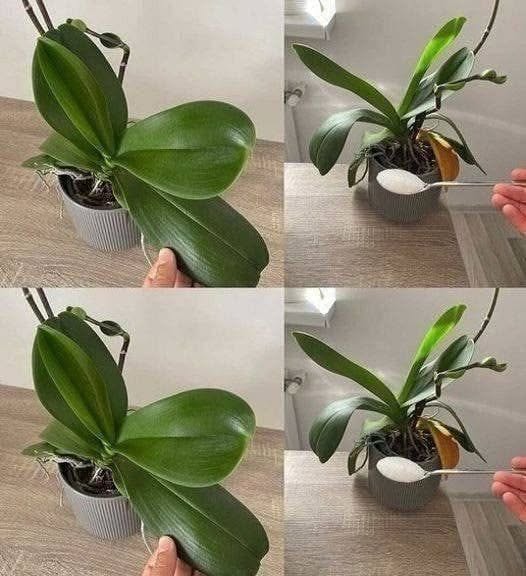
6. Signs of nutrient deficiency
Detecting nutrient deficiencies early helps prevent long-term damage to orchids. Common symptoms include:
- Nitrogen deficiency: Yellowing of older leaves, stunted growth, and weak roots.
- Phosphorus deficiency: Poor root development and reduced flowering or bud drop.
- Potassium deficiency: Leaf margins turning brown or scorched, and weak stems.
- Micronutrient deficiencies: Chlorosis (yellowing between veins), distorted leaves, or poor flower color.
Addressing these deficiencies usually involves adjusting the fertilizer type or concentration, but care must be taken to avoid overcorrecting.
7. Recognizing fertilizer burn
Fertilizer burn occurs when excess salts damage orchid roots and leaf tissues. Early signs include:
- Brown, crispy leaf edges or tips
- Wilting despite adequate watering
- Root tip blackening and decay
- Salt crusts visible on potting medium surface
If fertilizer burn is suspected, thoroughly flush the growing medium with lukewarm water to wash away accumulated salts. Repotting may be necessary if root damage is severe.
8. Adjusting feeding for orchid species
Different orchid species have varying nutrient requirements. For example, epiphytic orchids like Phalaenopsis and Cattleya prefer lighter feeding and faster-draining media, while terrestrial orchids may tolerate richer fertilization.
Research the specific needs of your orchid species and adjust fertilizer concentration, frequency, and formulation accordingly.
- Epiphytes: Use diluted fertilizer more frequently with good drainage.
- Terrestrial orchids: Slightly higher nutrient concentrations may be tolerated.
- Flowering orchids: Increase phosphorus proportion during bloom development.